Interest rates and housing go hand-in-hand, and right now one of the biggest financial stories is the recent decision by President Trump to nominate Kevin Warsh as the next Federal Reserve Chairman, succeeding Jerome Powell when his term ends this spring.
If you’re thinking about buying or selling a home, you might be hearing headlines about the Fed, mortgage rates, and the economy — but what does it all actually mean for you? Let’s unpack it in a way that makes sense.
🏛️ Why the Fed Chairman Matters
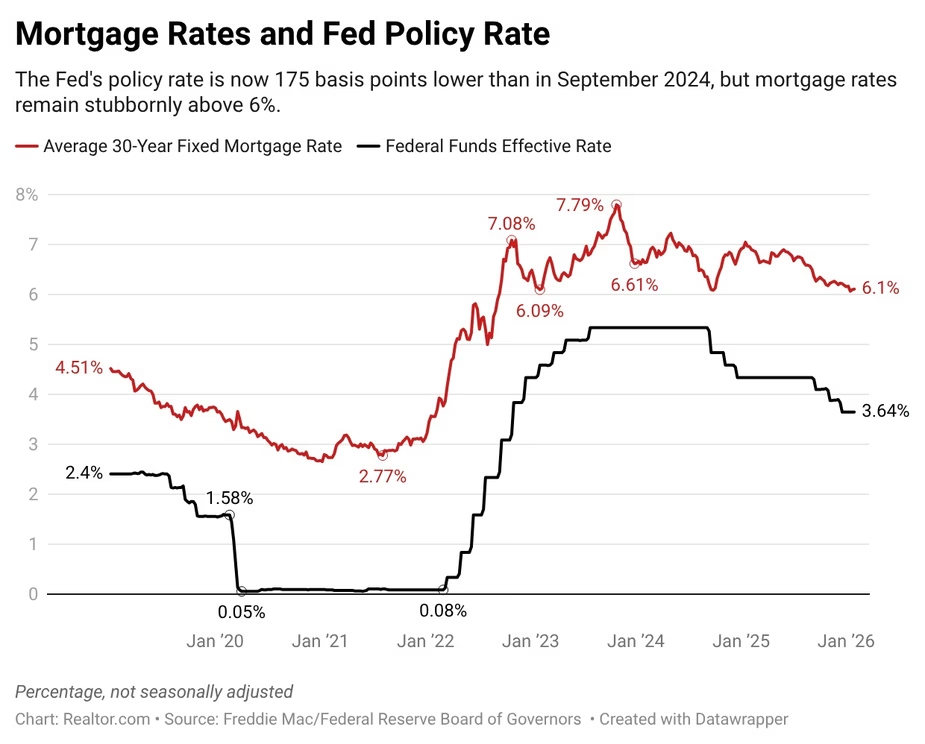
The Federal Reserve — often just called the Fed — influences the economy primarily by setting the federal funds rate, which is the rate banks charge each other for overnight loans. That rate doesn’t directly set mortgage rates, but it affects the overall interest rate environment, and changes can flow through into mortgage pricing over time.
As of the start of 2026:
-
The Fed has held the benchmark rate steady at 3.50%–3.75% after a series of cuts in 2025.
-
Recent average 30-year mortgage rates have been in the low 6% range, down from highs above 7% in 2024 and early 2025.
But a change in leadership could shift expectations — and that’s where things get interesting.
🔄 What Kevin Warsh’s Nomination Could Mean
Kevin Warsh served as a Fed governor before and is known for being market-friendly with a preference for lower rates — at least relative to earlier Federal Reserve policy.
But there are three important realities to understand:
1. The Fed Chair Isn’t a One-Person Rate Setter
Yes, the chair is influential — but monetary policy is set by the Federal Open Market Committee (FOMC), which includes multiple policymakers. So even if Warsh supports lower rates, he still needs consensus from other members to actually cut the federal funds rate.
2. Mortgage Rates Aren’t Set Directly by the Fed
Mortgage rates are more closely tied to long-term market forces like investor demand for U.S. Treasury bonds and mortgage-backed securities. Even if the Fed cuts the federal funds rate, mortgage rates don’t always move in lockstep.
3. Rate Cuts Could Still Help Affordability
That said, if the Fed does ease policy (including cutting the federal funds rate), it usually puts downward pressure on longer-term borrowing costs, including mortgages. Experts have said that even moderate cuts could help mortgage rates edge lower — perhaps into more affordable ranges for buyers — though it won’t instantly return rates to the ultra-low levels seen earlier in the decade.
Economists surveyed recently expect moderate rate cuts in 2026 (often two or three quarter-point moves), which could gradually nudge mortgage rates down and improve affordability.
💡 So What Does This Mean for Buyers & Sellers?
For Buyers
🔑 Lower rates (if they happen) could increase your buying power — meaning you might qualify for a larger loan or pay less per month for the same loan amount. Even a half-percent drop in mortgage rates can translate into significant savings over the life of a loan.
But it’s important to understand:
-
Markets anticipate expectations — if everyone is waiting for cuts, buyers sometimes delay and activity slows temporarily.
-
Mortgage rates could still stay relatively high if long-term market forces don’t shift dramatically.
For Sellers
Interest rate trends influence buyer demand. Lower rates often bring more buyers off the sidelines, which can mean more competition for listings. That can support pricing even if overall economic activity is moderate.
But if rates stay flat or volatility increases, buyers might still be cautious — meaning good listing strategy, staging, and pricing become even more important.
📊 The Bottom Line
-
A new Fed chair like Kevin Warsh could signal a willingness to lower short-term rates — potentially making mortgage financing slightly cheaper over time.
-
Mortgage rates are not set by the Fed directly — they’re influenced by market expectations, bond yields, and economic data as well.
-
Even modest rate movement can influence your monthly payment and buying power — but timing the market rarely works better than having a plan.
If you’re thinking about buying or selling in 2026, let’s talk about what this could mean for your specific goals and timeline.
📲 Ready to explore your next move with clarity and confidence? Call me and remember for all your real estate needs ...get Jacque.